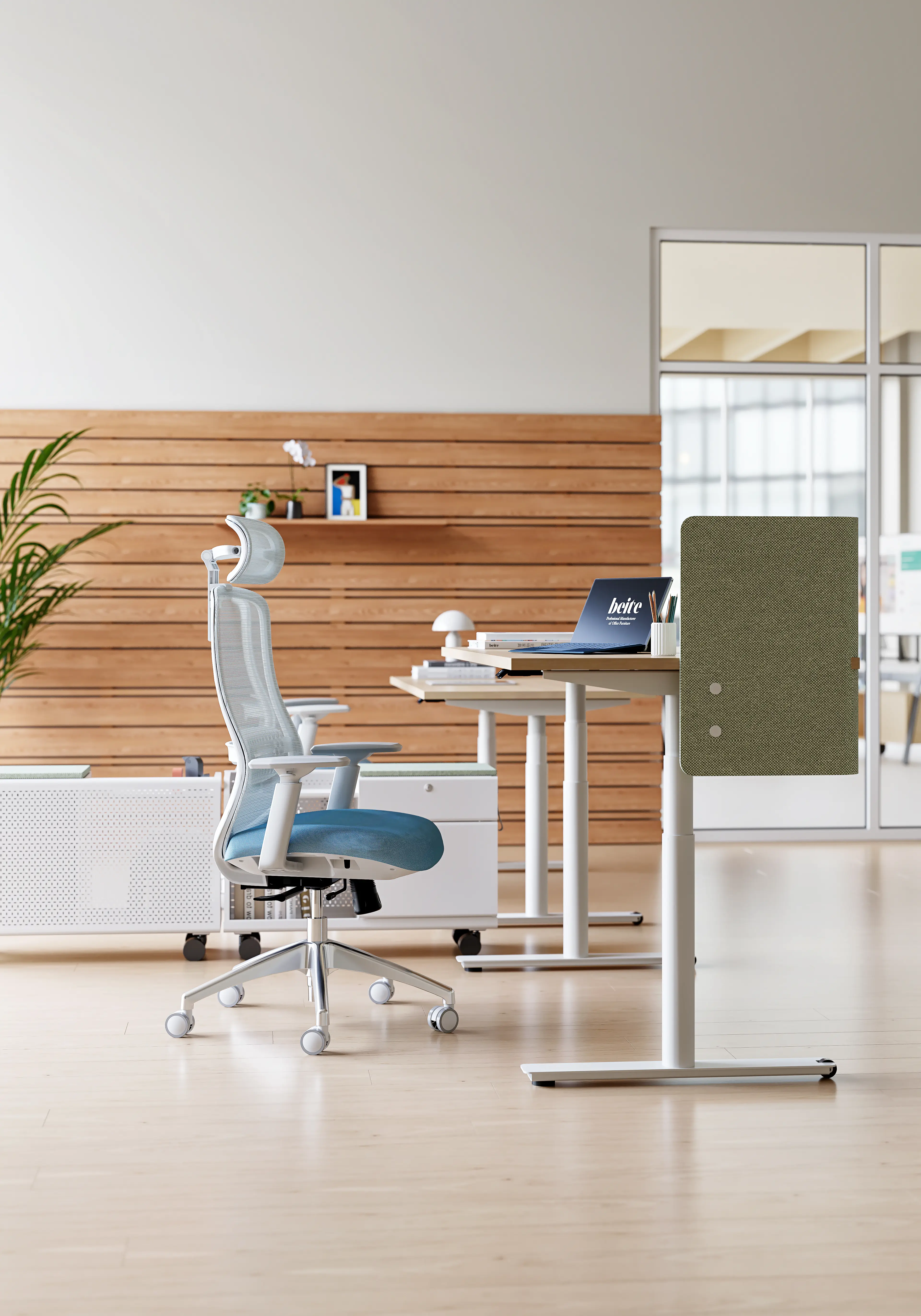
Most people choose an office desk by how it looks: the top, the colour, the size. Height is usually the last thing checked — and it is the one that decides how comfortable the desk still feels after a few hours of work.
This guide covers how to measure the right height for you, what depth to choose, and what changes when the desk is for a whole team. If you are still deciding whether you need a sit-stand desk at all, start with what is a standing desk.
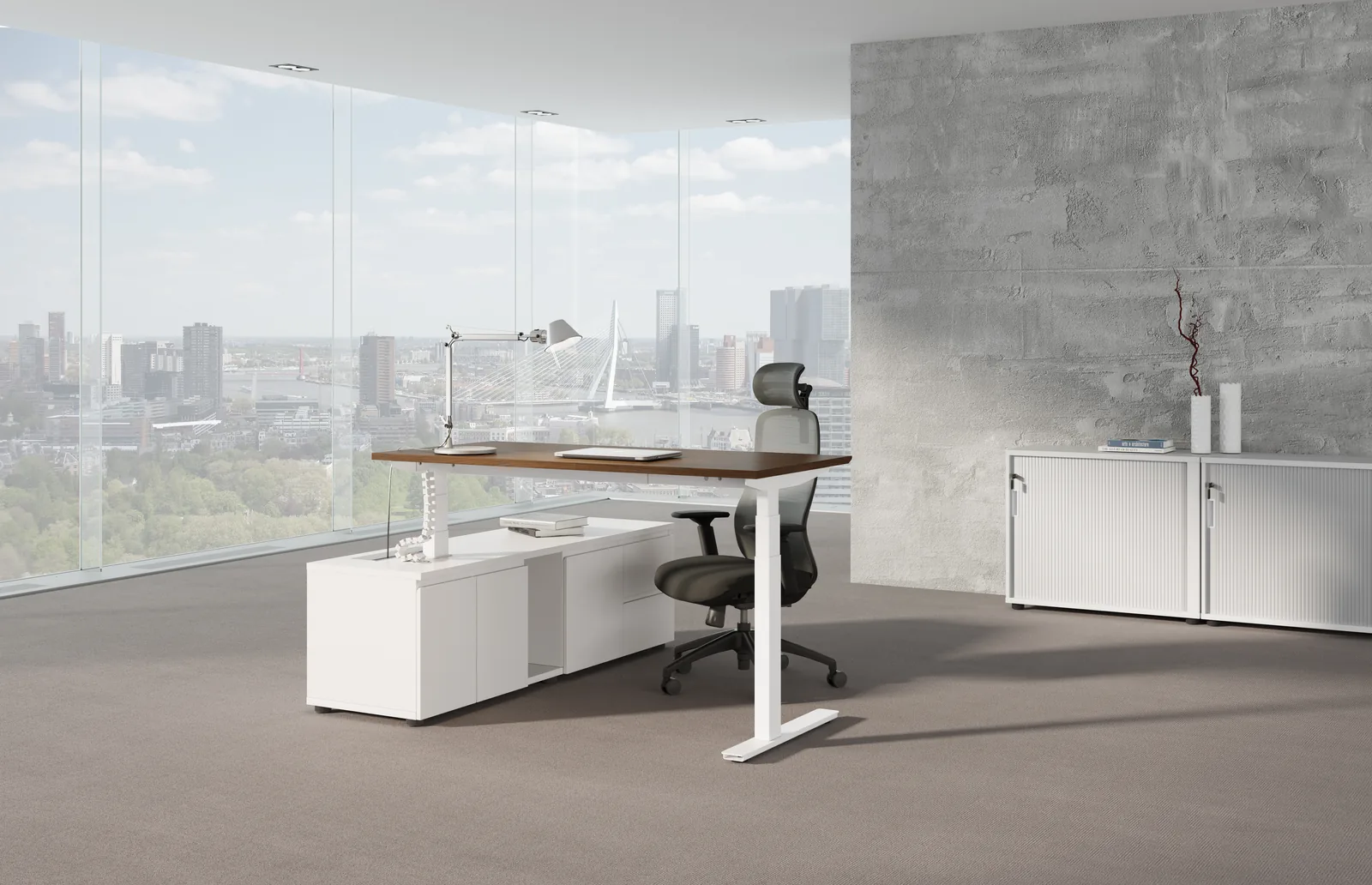
Start by measuring, not calculating
The most reliable way to find the right height is to measure your own body. Sit with your feet flat on the floor and your back against the chair. Let your arms hang, then bend your elbows to 90 degrees.
The height of your elbows above the floor is the height the desktop should be — or up to two centimetres below it. With the keyboard at that level, the shoulders stay relaxed and the wrists stay straight.
If the chair does not adjust far enough, work in the other direction: set the chair so your feet are supported, then use a footrest to make up the difference. This is the same order of adjustment described in OSHA's guidance on computer workstation desks.
The 75 cm standard does not fit everyone
Almost every office desk sold in most markets is 75 cm high. It is the industry standard, and it works reasonably well for people between about 1.70 m and 1.80 m.
For someone at 1.60 m, that desk usually sits too high: the shoulders lift and the wrists bend back. For someone at 1.90 m it sits too low, and the person ends up leaning forward.
In other words: 75 cm is a compromise, not a correct measurement.
A quick estimate, for cross-checking
As a rough reference, use 0.43 times your height for seated work and 0.62 times your height for standing work. This is not an exact rule — it is a starting point to compare against the elbow measurement.
| User height | Seated reference | Standing reference |
|---|---|---|
| 1.55 m | 67 cm | 96 cm |
| 1.65 m | 71 cm | 102 cm |
| 1.75 m | 75 cm | 109 cm |
| 1.85 m | 80 cm | 115 cm |
Notice that both ends of the table fall outside the range of most ready-made desks. That is why, in a team with people of very different heights, height adjustment stops being a convenience and becomes a requirement.
Depth matters as much as height
A desk 60 cm deep holds a laptop and a notebook. Once an external monitor, a book or a folder arrives, it is full and the person starts working at an angle.
For long sessions, 70 cm is the comfortable minimum. If the desk sits against a screen or partition, add another 5 cm for the cable tray behind.
Fixed, height-adjustable, or L-shaped
If one person uses the desk seated, a fixed desk at the right height works. The problem is that the right height depends on who sits there — in a shared or hot-desking office, that does not work.
In that case, a height-adjustable desk solves it once: each person sets their own position, and the same desk serves for sitting and standing. In our BALLOON line the height runs from 685 to 1,245 mm — enough for someone around 1.60 m seated through to someone around 1.90 m standing.
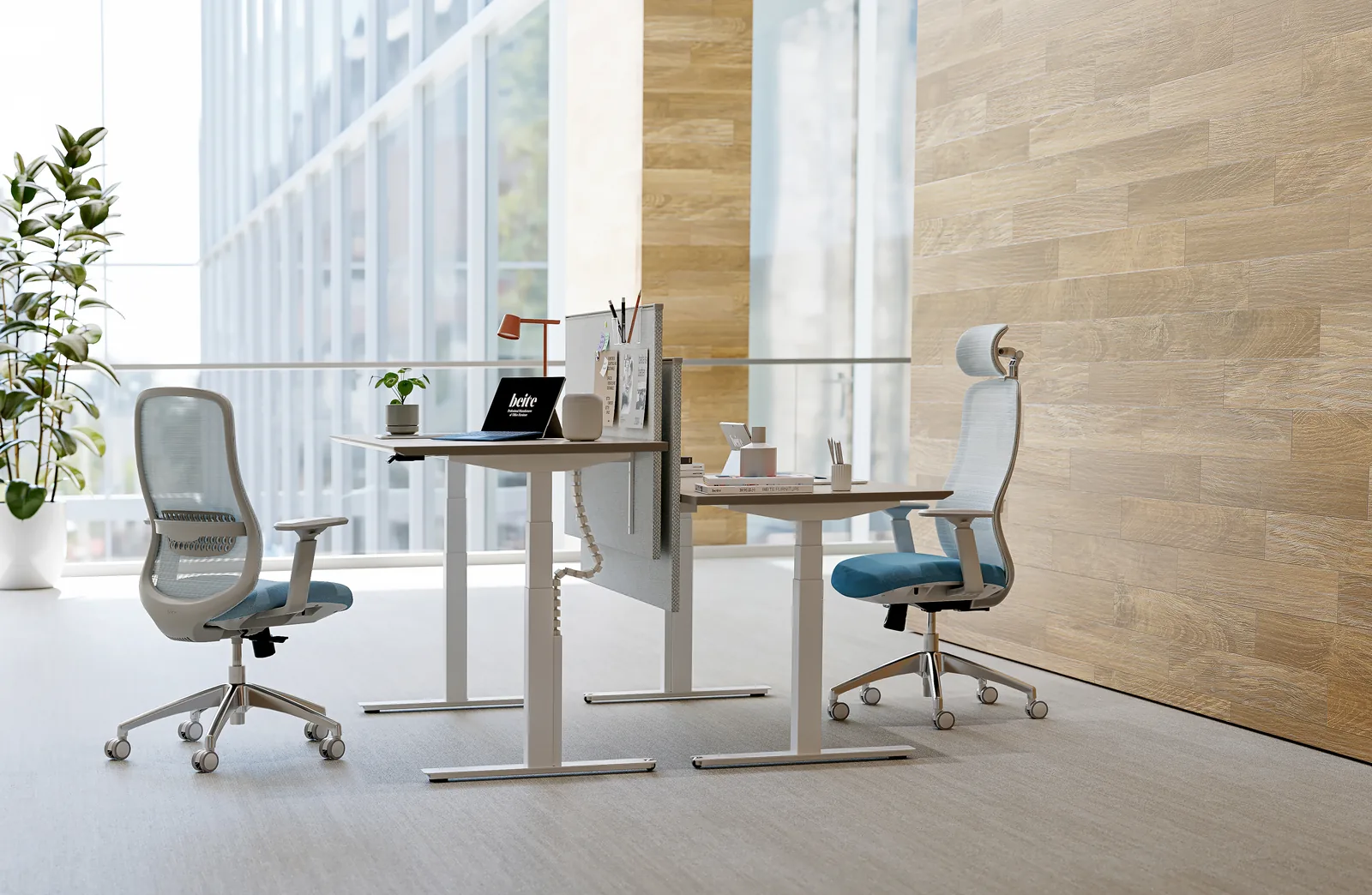
An L-shaped desk is another option for two working fronts, but it limits fine height adjustment and takes more floor area.
Using elbow height to filter models
A practical example. Take a team of people at 1.60 m, 1.75 m and 1.88 m.
Measured at the elbow, their seated working heights come out at roughly 68, 75 and 81 cm. The desk you choose has to cover at least that 68–81 cm range — and if the team also works standing, up to about 117 cm for the tallest person.
The 0.43 reference would give 69, 75 and 81 cm, which is close enough that either method leads to the same model. That is the point: the formula narrows the field, the elbow measurement makes the final call.
With that range in hand, the question to a supplier stops being "is it good?" and becomes "what is the minimum and maximum height?". That is a question any serious supplier answers with a number.
Three common mistakes
The first is choosing by width and forgetting depth — depth decides whether an external monitor fits.
The second is buying by the standard height without testing it. A 75 cm desk can be comfortable for one person and uncomfortable for another in the same room.
The third is choosing from a photograph. Worktop finish, board thickness and adjustment mechanism only show up in daily use, not in a catalogue image.
When the desk is for a whole office
For buyers working in volume — dealers, fit-out contractors and companies furnishing a site — the logic changes. Height stops being an individual choice and becomes a range that has to serve everyone. OSHA's workstation guidance puts it plainly: where one desk height cannot suit every user, provide height-adjustable desks.
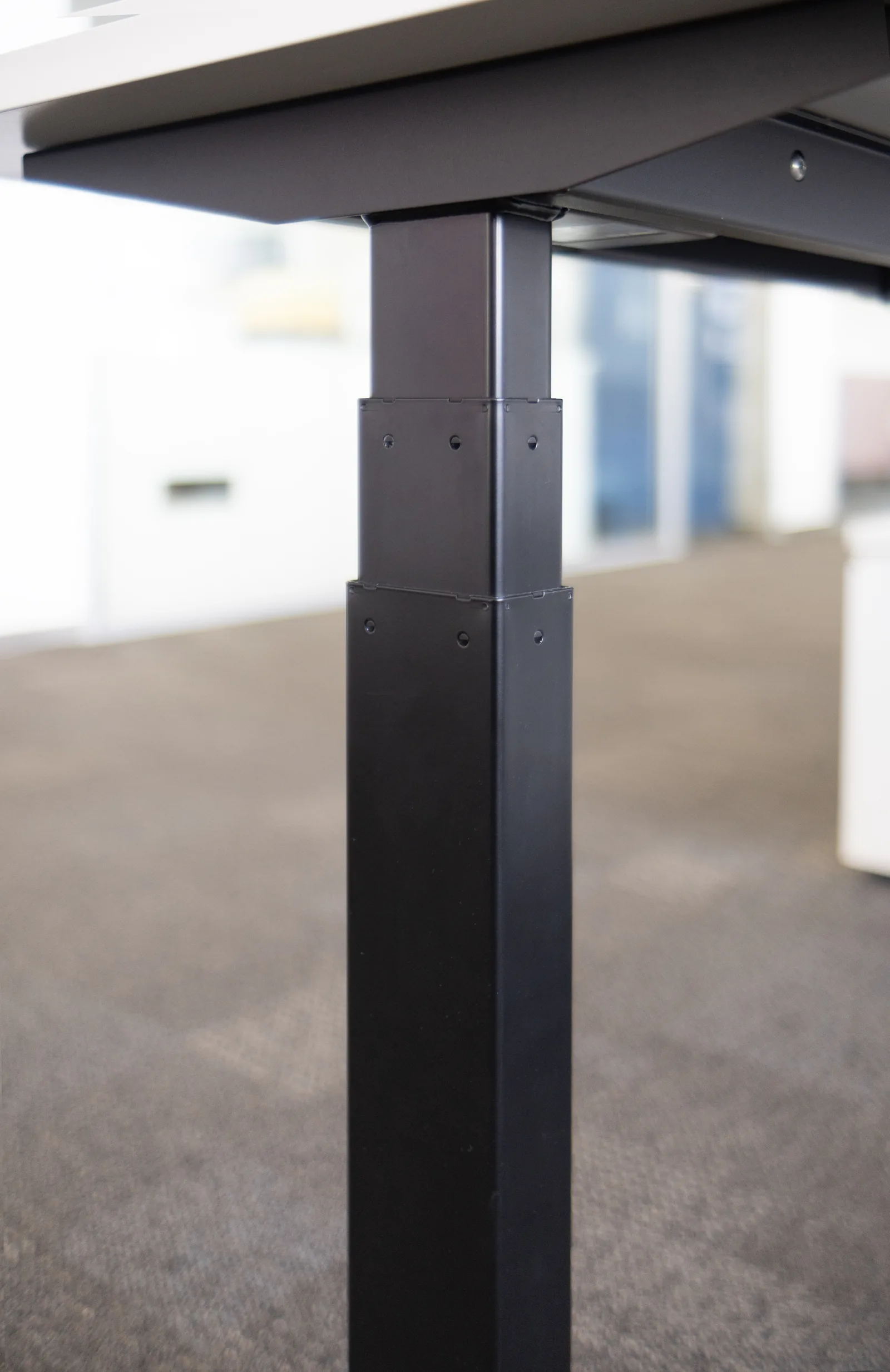
Three points usually decide the purchase:
- Adjustment range: confirm the minimum and maximum height, not just the stroke. A 400 mm stroke sounds generous until you find the desk starts at 750 mm.
- Packing efficiency: desks delivered unassembled in two cartons take less volume and cut freight per unit.
- Standardised tops and frames: makes replacement and maintenance easier later.
See the full range of office desks we manufacture, with specification sheets and CBM per model. If you are comparing formats, we also have other office furniture guides.
Frequently asked
What is the ideal height for an office desk?
There is no single number. For most adults it falls between 72 and 76 cm seated, but the correct method is to measure elbow height with the chair set up.
Is a 75 cm desk suitable for someone at 1.60 m?
It can be used, but it is rarely comfortable for long periods. Something around 68 cm would suit better, or use a footrest to compensate.
What height should I use for standing work?
About 0.62 times your height — roughly 109 cm for someone at 1.75 m. Confirm with the elbow measurement: standing, the top should sit at elbow level with the arms relaxed.
What is the minimum depth?
60 cm for a laptop; 70 cm when there is an external monitor or reference material.
For specification sheets, CBM and units per container, message Alex on WhatsApp: +86 173 2953 7775.