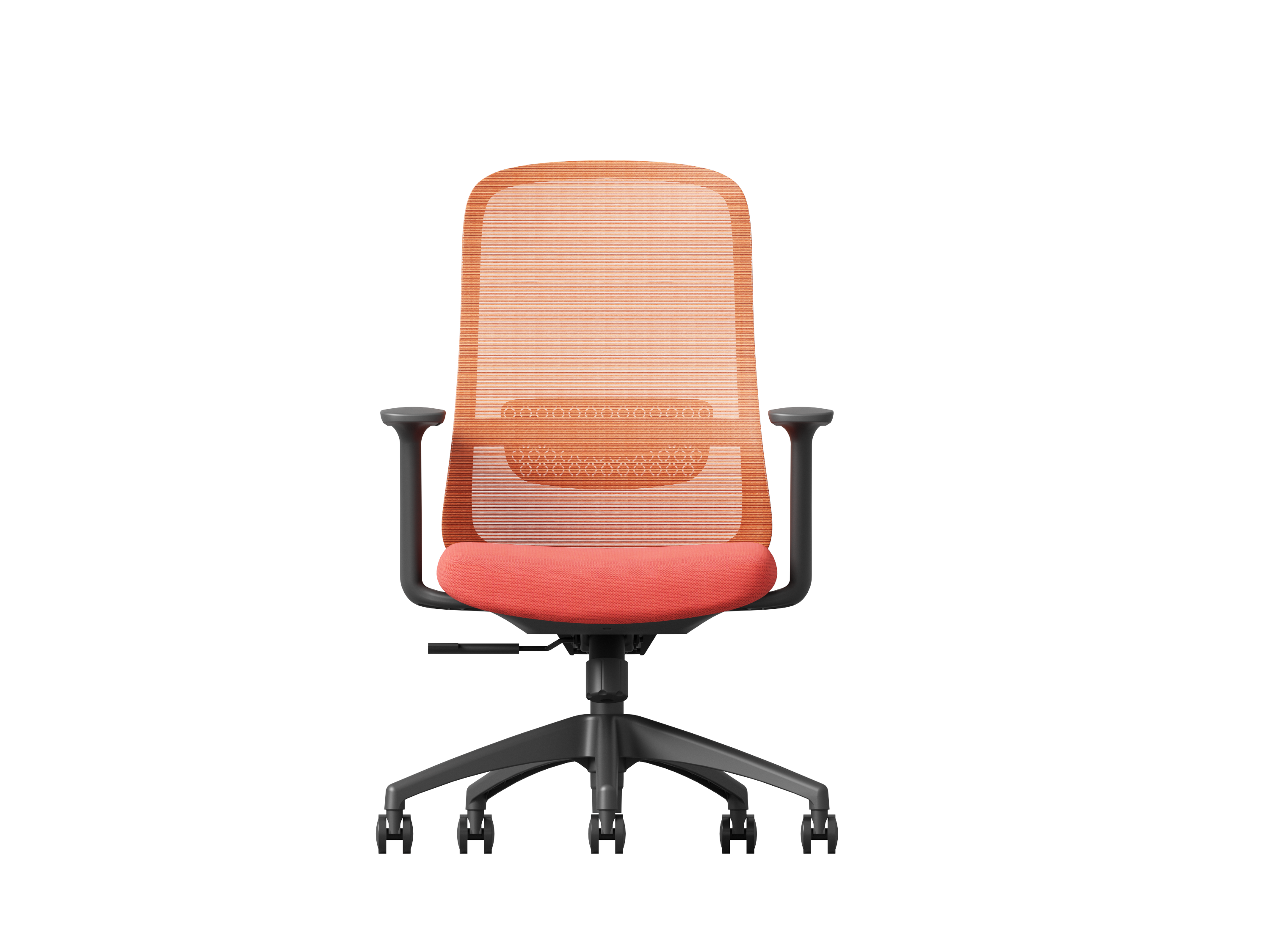
The ergonomic chair market is a minefield. Search "best office chair" and you'll find a thousand options priced anywhere from $199 to $4,000, all claiming the same things: lumbar support, breathable mesh, "designed by ergonomists." Most of them are lying — or at least stretching the truth to the breaking point.
Here is what actually matters when you're investing in seating that needs to perform for eight-plus hours a day, five-plus years at a time.
The Frame Is Everything
A chair's lifespan is determined before the first bolt is tightened. Look at what's underneath the upholstery.
Die-cast aluminum frames distribute stress across the entire structure. They don't warp under heat, don't crack under repeated loading, and maintain dimensional stability for decades. This is aerospace-grade thinking applied to furniture.
Injection-molded nylon is the industry compromise — lighter, cheaper, and adequate for light-to-moderate use. It'll get you through a three-year lease. It won't get you through a career.
Stamped steel sits somewhere in between. Strong but heavy, and prone to corrosion if the finish is compromised.
If the product page doesn't tell you what the frame is made of, assume it's nylon. Manufacturers who use aluminum lead with it.
The Mechanism Is the Chair
The tilt mechanism — the metal assembly under the seat that controls movement — is the single most expensive component in any task chair. It's also where budget brands cut corners most aggressively.
A synchronous mechanism links the seat and backrest so they move together at a fixed ratio. When you recline, the seat tilts upward slightly, keeping your feet on the floor and your eyes on the monitor. This is the gold standard.
A synchro-tilt with seat slider adds depth adjustment — the seat pan moves forward or backward independently. This matters enormously for anyone over 6'0" or under 5'4".
Multi-function mechanisms add independent back-angle and seat-angle locks. These are found on chairs designed for task-intensive work where posture changes throughout the day.
If a chair has a single lever and a "tilt tension" knob, it's entry-level. That doesn't mean it's bad — it means it's designed for meeting rooms, not all-day desk work.
Mesh vs. Upholstery: It's Not About "Breathability"
Mesh chairs exploded in popularity during the dot-com era, led by the Herman Miller Aeron. The selling point was airflow. The real engineering challenge was something else entirely: pressure distribution without foam.
A properly tensioned mesh seat eliminates pressure points by conforming to the body without bottoming out. Cheap mesh — the kind found on sub-$500 chairs — sags within 18 months. Once it sags, the frame pushes through, and you're essentially sitting on plastic rails.
High-resilience molded foam remains the safer bet for most buyers. Density is the metric that matters: anything below 45 kg/m³ will compress permanently within two years. Premium seating uses 55-65 kg/m³ foam that maintains its shape and support for a decade or more.
Upholstery choice follows from foam choice. Woven wool blends and full-grain leather breathe naturally and age beautifully. Bonded leather and PU leather peel. Every time. The chemistry is unforgiving — polyurethane coatings break down under body heat and friction, and there is no way to repair them.
Adjustability: More Isn't Always Better
A chair with fifteen adjustment points that nobody knows how to use is worse than a chair with five that are intuitive.
The non-negotiable adjustments:
- Seat height — obvious, but the range matters. Pneumatic cylinders come in different stroke lengths. A tall user needs a longer stroke.
- Seat depth — the distance between the backrest and the front edge of the seat. Two to three fingers of clearance behind the knee is correct.
- Backrest height and angle — lumbar support that can be positioned at the correct vertebral level.
- Armrest height and width — arms should float at elbow height without forcing the shoulders up or down.
Everything beyond these four is valuable only if the user takes the time to dial it in. A chair that ships with a one-page adjustment guide is worth more than one with twenty knobs and no instruction.
Weight Capacity and Testing Standards
ANSI/BIFMA is the North American furniture testing standard. A chair that passes BIFMA has survived:
- 100,000+ cycle swivel testing
- 300 lb static load on the seat
- 150 lb static load on the backrest
- Impact testing on the armrests from multiple angles
Look for the BIFMA certification mark. If it's not there, the chair hasn't been independently tested — or it failed.
Weight capacity is not about whether the chair fits a larger person. It's about the engineering margin built into every component. A chair rated for 350 lbs uses a thicker cylinder, a stronger mechanism, and a reinforced frame. Those upgrades benefit a 180 lb user who sits down heavily fifty times a day over fifteen years.
The Warranty Tells the Truth
A manufacturer's warranty is the most honest signal in the furniture industry. It costs them real money to honor.
- Lifetime on frame and mechanism — they believe in their engineering
- 12 years on everything — industry standard for premium seating
- 5 years — mid-market
- 2 years or less — they expect the chair to fail
Read the warranty terms carefully. "Lifetime" sometimes means "the expected useful life of the product" as defined by the manufacturer. If the fine print covers "defects in materials and workmanship" but excludes "normal wear and tear," the coverage is narrower than the headline suggests.
What You Should Actually Pay
The premium seating market has three tiers:
- $1,200–$1,800 — entry-level premium. Durable, adjustable, BIFMA-certified. Think Steelcase Series 2, Herman Miller Sayl.
- $1,800–$3,000 — the professional tier. Better materials, more adjustability, longer warranties. Steelcase Leap, Herman Miller Aeron, Haworth Fern.
- $3,000+ — the executive tier. Full-grain leather, polished aluminum, heirloom-quality construction. These are furniture pieces, not just office equipment.
Below $800, you are making compromises that will cost more money within three years. The math is simple: a $400 chair replaced every two years costs $2,000 over a decade. A $1,500 chair with a 12-year warranty costs $1,500 over the same period — and you sit better for all ten of those years.
The One-Minute Sit Test
Before buying anything, sit in the chair for at least sixty seconds the way you actually work — not perched on the edge like you're at a job interview. Adjust nothing at first. Notice where your body makes contact. Then adjust the chair to fit you. If you can't get comfortable in five adjustments or fewer, the chair isn't right for your body geometry, and no amount of engineering will fix that mismatch.